

Color Trends for Dubai Homes in 2026
Colour is the fastest way to change how a room feels. You can repaint a living room in a weekend for under AED 3,000. No demolition, no contractors, no permits. Just a different colour on the walls, and the entire atmosphere shifts.
But picking colours for a Dubai home is different from picking colours for a London flat. The light here is stronger. Sunlight comes through bigger windows. White walls glow. Dark walls absorb heat you can feel. Colours that look warm in a showroom can look completely different under Dubai’s afternoon sun.
Here are the colour directions Dubai homeowners are moving toward in 2026, and how to use them room by room.
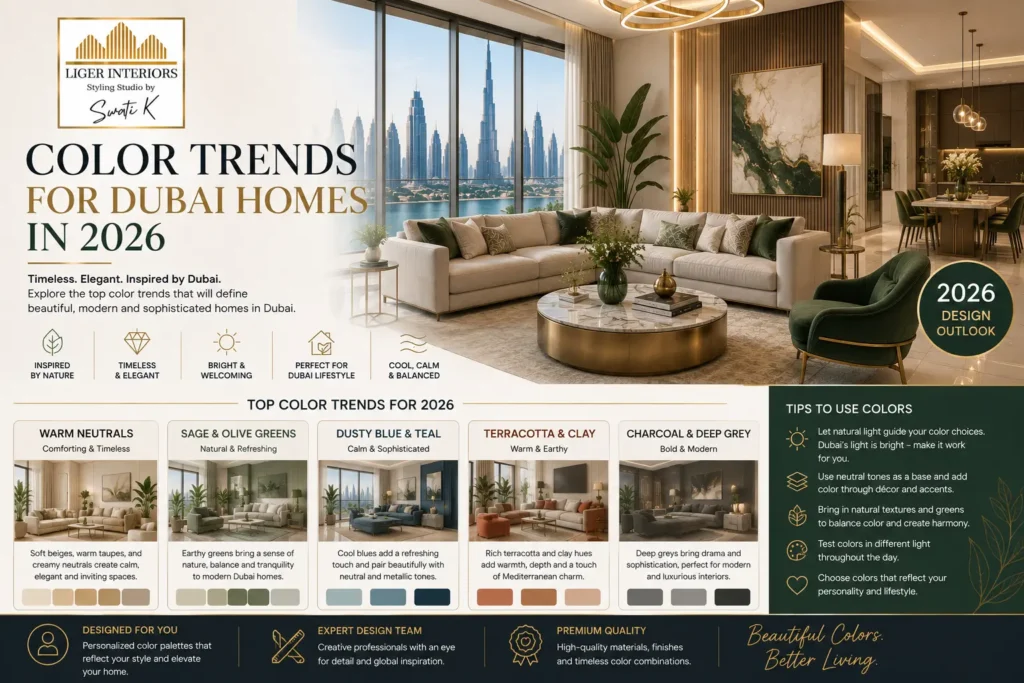
Warm Neutrals Are Still the Foundation
Cold greys had their moment. In 2026, Dubai homes are shifting toward warmer neutrals. Think warm white (not hospital white), greige (grey with a warm undertone), sand, oatmeal, soft taupe, and warm stone tones.
These colours work with Dubai’s natural light. They do not fight the warmth of the sunshine coming through the windows. They feel calm without feeling cold, and they pair with almost any accent colour and material.
If you are painting a full apartment or villa and want one safe, beautiful base colour, a warm white with a slight cream undertone is the answer. Jotun’s “Timeless” range and “Warm Linen” tones are popular choices across Dubai projects right now.
Where to use them: Everywhere. Living rooms, bedrooms, hallways. They are your canvas. Add personality through furniture, artwork, and accent walls rather than painting every wall a different colour.
Earthy Tones Are Gaining Ground
Beyond basic neutrals, earthy tones are showing up more in Dubai interiors. Terracotta, olive green, clay, rust, and burnt sienna. These colours connect a space to nature and add warmth that pure whites and greys cannot match.
Earthy tones work well as accent walls or in specific rooms. A terracotta accent wall in a dining area. Olive green in a study or reading corner. Clay-toned kitchen cabinets with brass hardware.
The key is restraint. One or two rooms with earthy accents against a neutral base. Not the whole villa in terracotta.
Bold Accents in Small Doses
Some homeowners want more than neutrals. They want a living room that makes people stop and look. That is where bold accent colours come in.
Deep emerald green. Stunning on a feature wall or as the colour of a statement sofa. Works with brass hardware and warm wood.
Navy blue. Classic, grounding, and sophisticated. A navy accent wall in a bedroom with white bedding and wood furniture feels like a boutique hotel.
Burgundy and wine tones. Rich and dramatic. Best in living rooms and dining areas where you want warmth and intimacy. Not for small rooms where it can feel heavy.
Burnt orange and rust. Playful but grown-up. Works as cushion colours, a single painted wall, or in artwork. Pairs well with warm neutrals and natural textures.
The rule: pick one bold colour per room. Use it on one wall, or in soft furnishings, or in artwork. Never on all four walls unless the room has excellent light and high ceilings.
Room-by-Room Colour Guide
Living Room
Start with warm white or warm grey on most walls. Add a single accent wall in a deeper tone if you want drama, or use your feature wall material (wood panelling, stone, fluted panels) as the accent instead of paint.
The living room gets the most natural light in most Dubai homes, so colours show their true tone here. Test your paint on the actual wall and check it at midday and in the evening before committing.
Kitchen
White or off-white cabinets remain the most popular choice because they make kitchens feel bigger and brighter. If you want colour in the kitchen, do it through the splashback tiles (a deep green or blue tile behind a white kitchen is a popular combination) or through painted lower cabinets with white uppers.
Avoid very dark colours on all kitchen cabinets unless the kitchen is large and well-lit. Dark cabinets in a small Dubai kitchen make it feel like a cave.
Bedroom
Calming, low-stimulation colours. Soft blues, muted greens, warm greys, or dusty pink. These tones help you wind down. Avoid anything too bright or stimulating.
A dark accent wall behind the headboard (charcoal, deep blue, or forest green) adds depth and makes the bed area feel cosy. The remaining three walls stay light.
Bathroom
White and light tones dominate because they feel clean. If you want colour in the bathroom, bring it through the tiles rather than paint. A sage green tile, a blue mosaic accent strip, or warm grey porcelain.
Matte-finish paint on bathroom walls above tiles should be a moisture-resistant formula. Standard wall paint peels in Dubai’s bathroom humidity.
Kids’ Rooms
Kids’ rooms can handle more colour. Soft pastels (mint green, light blue, blush pink, pale yellow) work as wall colours that will not feel overwhelming. Brighter colours are better as accents in bedding, shelving, and artwork that can be swapped as the child grows.
Avoid painting the whole room in a strong colour. A child’s taste changes every few years, and repainting a neon-orange room takes multiple coats to cover.
Home Office or Study
Greens and blues boost focus. A muted sage green or soft teal on the wall behind the desk creates a calming work environment without being boring.
Warm white on the remaining walls keeps the room bright for video calls (important if you work remotely).
How Dubai Light Affects Colour
This is the part most people underestimate.
Dubai sunlight is strong and warm. It makes cool colours (blue-greys, icy whites) look warmer than they appear on the paint swatch. And it makes warm colours (creams, yellows) look even warmer, sometimes too warm.
Always test on the wall. Buy a sample pot and paint a section of the actual wall. Look at it at 10am, 2pm, and 8pm under artificial light. Colours shift through the day, and what looks perfect at noon can look yellow at sunset.
South and west-facing rooms get the strongest light. Use slightly cooler tones here to balance the warmth. A warm white that looks perfect in a north-facing room can look beige in a west-facing living room at 4pm.
Artificial lighting changes colour too. Warm LED bulbs (2700K to 3000K) push colours toward yellow. Cool white bulbs (4000K+) push them toward blue. Match your bulb colour temperature to your paint choice.
Colour Combinations That Work in 2026
Warm white walls + natural wood + brass hardware. Clean, warm, and timeless. Works in every room.
Greige walls + emerald green accents + dark wood. Sophisticated and grounded. Living rooms and dining areas.
Off-white walls + navy accent wall + white bedding + wood. Hotel-inspired bedroom. Calm and structured.
Sand-toned walls + terracotta soft furnishings + rattan. Relaxed, natural, and suited to Dubai’s desert setting.
White kitchen + sage green tile splashback + oak countertop. Fresh, modern, approachable.
Paint Brands Popular in Dubai
Jotun. The most widely used brand in UAE. Good colour range, reliable finish, widely available. Their “Sens” line is popular for a smooth, breathable finish.
Dulux. Strong colour selection with colour-matching technology. AmazingSpace stores across Dubai.
Benjamin Moore. Premium option with a wider colour palette. Good for when you want a very specific shade.
National Paints. UAE-manufactured, affordable, and performs well in Dubai’s climate. A solid budget option.
For most Dubai homes, Jotun or Dulux in a washable matte finish is the right choice. Two coats over a proper primer. Budget AED 8,000 to 20,000 for a full villa paint job depending on size.
We handle painting as part of our renovation services. Colour selection is included in our design consultation.
Questions People Ask
What is the most popular wall colour in Dubai homes in 2026?
Warm white with a slight cream or greige undertone. It works with Dubai’s strong natural light, pairs with any furniture style, and feels both fresh and warm. Jotun “Timeless” and similar warm white tones are the most requested across Dubai projects.
Should I paint all rooms the same colour?
You can, especially if you use a versatile warm neutral. It creates flow between rooms. But adding a different accent wall colour or a slightly different tone in bedrooms adds personality without breaking the continuity.
How often should I repaint in Dubai?
Every 3 to 5 years for high-traffic areas (hallways, living rooms). Bedrooms and lesser-used rooms last longer. Dubai’s dust settles on walls, and marks accumulate faster in homes with children. A fresh coat of paint is one of the cheapest ways to refresh a home.
What paint finish should I use?
Matte or eggshell for living rooms and bedrooms. Satin for kitchens, bathrooms, and children’s rooms (easier to wipe clean). Gloss only for woodwork and trim. Avoid flat finishes in high-humidity rooms.