

Biophilic Design for Dubai Apartments: Bringing Nature Indoors
Meta Title: Biophilic Design Dubai | Plants, Natural Materials & Wellness Interiors | Liger Interiors Meta Description: Biophilic design ideas for Dubai apartments. Indoor plants, natural materials, light, and wellness-focused interiors that work in the UAE climate. (151 chars)
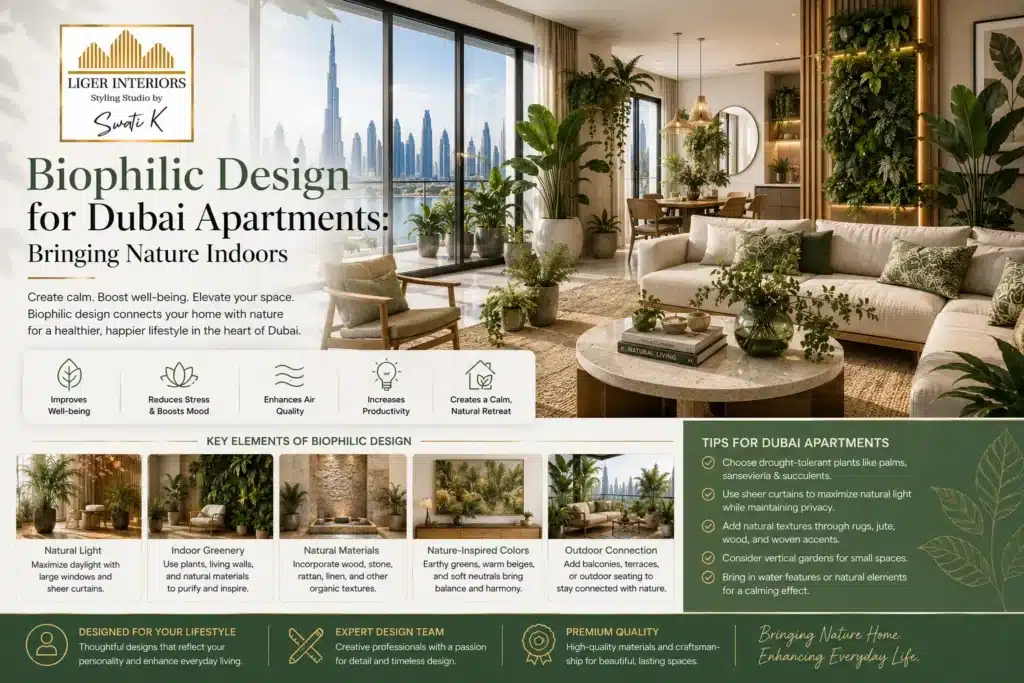
Biophilic design is a term that sounds complicated but describes something simple: designing spaces that connect you to nature. Plants, natural light, wood, stone, water features, views of greenery. The things that make you feel calmer without you noticing why.
In Dubai, this matters more than in most cities. You spend 9 to 10 months indoors in air conditioning. The outdoors is too hot to use from May to September. If your apartment feels like a sealed box of white walls and artificial light, you feel it over time. Biophilic design is the fix.
And it does not require a roof garden or a waterfall in the living room. Small, practical changes bring nature into a Dubai apartment without a renovation.
Why It Works in Dubai
Dubai’s climate pushes people indoors. Most residents spend the majority of their waking hours inside air-conditioned spaces: home, office, car, mall. That disconnection from nature affects mood, sleep, and productivity.
Adding natural elements to your home counteracts that. Research shows that even looking at plants or natural materials reduces stress and improves focus. A room with natural wood, a few plants, and good daylight feels different from a room with laminate and fluorescent lighting, even if you cannot articulate why.
In a city made of glass, steel, and concrete, bringing nature into your home is not decorative. It is a quality-of-life decision.
Start with Natural Light
Before you buy a single plant, make the most of the natural light your apartment already has.
Remove heavy curtains. Replace dark, thick curtains with sheer panels that filter light without blocking it. You still get privacy, but the room fills with soft daylight.
Keep window areas clear. Move furniture away from windows. A desk or reading chair placed near the window connects you to the outdoors even when you cannot go outside.
Mirrors opposite windows. A large mirror on the wall facing a window bounces light deeper into the room. It doubles the perceived daylight and makes the space feel bigger.
Warm-white artificial lighting. When the sun goes down, warm LED bulbs (2700K to 3000K) mimic natural light better than cool white or daylight bulbs. Avoid overhead fluorescents in living spaces.
Plants That Survive in Dubai Apartments
Not every plant handles Dubai. The combination of strong AC, low humidity indoors, and intense summer light through windows creates a tricky environment. These plants handle it:
Snake plant (Sansevieria). Nearly impossible to kill. Tolerates low light, dry air, and irregular watering. Place it in a corner, water it every 2 to 3 weeks, forget about it.
Pothos / Devil’s Ivy. Trailing plant that grows in low to medium light. Looks great on a high shelf or in a hanging planter. Handles AC-dried air well.
ZZ Plant (Zamioculcas). Glossy leaves, tolerates neglect, low-light friendly. A good option for hallways and bathrooms with no windows.
Monstera (Swiss Cheese Plant). Needs medium indirect light and weekly watering. A statement plant that brings immediate life to a living room corner.
Fiddle Leaf Fig. Looks stunning but is more demanding. Needs bright indirect light and consistent watering. Best placed near a window that does not get direct afternoon sun.
Rubber Plant. Bold, dark leaves. Handles low to medium light. Wipe the leaves occasionally to remove dust (important in Dubai).
Tip: If you travel or forget to water, get a self-watering planter or set up a simple drip system. Most plant deaths in Dubai happen during summer holidays when nobody waters for 2 weeks.
Natural Materials in Your Interiors
Plants are the obvious biophilic element. But the materials you use for furniture, flooring, and finishes matter just as much.
Wood. Engineered wood flooring, wood-panelled feature walls, a solid wood dining table, wood-framed mirrors. Wood adds warmth that no synthetic material replicates. In Dubai, engineered wood handles the climate better than solid wood. SPC flooring in a wood-grain finish is another option that gives the visual warmth without the maintenance.
We use wood and wood-look materials across most of our projects. See our flooring and feature wall work for examples.
Stone. Marble countertops, stone-look porcelain tiles, a pebble-tray under a planter. Natural stone adds weight and grounding to a room.
Rattan and wicker. Light, natural, and increasingly popular in Dubai interiors. A rattan accent chair, wicker baskets for storage, or a rattan pendant light. They bring texture and an organic feel.
Linen and cotton. Natural-fibre curtains, cotton cushion covers, linen throws. These fabrics breathe and feel softer than synthetics.
Jute and sisal. Area rugs in natural fibres add texture underfoot and define seating areas without feeling heavy.
Water Elements
The sound of running water is calming. You do not need a swimming pool in your living room.
A small tabletop fountain on a console table in the hallway creates ambient sound. A wall-mounted water feature in a large living area adds a focal point. Even a simple glass vase with a few submerged plants or pebbles brings a water element into the space.
In bathrooms, a rain showerhead already provides a water-connected experience. Adding pebble-look tiles on the shower floor reinforces the natural feeling.
Textures and Patterns from Nature
Biophilic design is not just plants and wood. It is also the patterns and shapes found in nature.
Curved furniture. Rounded edges, arched mirrors, oval coffee tables. Nature does not have sharp corners. Curved forms feel softer and more organic.
Botanical prints. Leaf patterns on cushions, wallpaper with botanical motifs, or framed botanical illustrations.
Fluted panels. Vertical fluted wood or MDF panels on walls mimic the texture of bamboo or tree bark. This is a feature wall technique we use across Liger Interiors projects. It adds depth and natural rhythm to a flat wall.
Natural colour palette. Greens, browns, warm whites, terracotta, sand, charcoal. Colours drawn from earth, sky, sand, and foliage. See our colour trends guide for specific palettes.
Biophilic Design Room by Room
Living room. A statement plant (monstera or fiddle leaf fig) in the corner. Wood or wood-look flooring. A jute rug. Linen curtains. Natural wood coffee table. A fluted or wood-panelled feature wall.
Bedroom. Small plants on the bedside table (snake plant or pothos). Linen bedding. Warm wood bed frame or headboard. Earthy colour palette (sand, sage, cream).
Kitchen. Herbs on the windowsill (basil, mint, rosemary). Wood or stone countertops. Rattan pendant lights. Open shelving with ceramic bowls and glass jars.
Bathroom. A small plant (ZZ plant or pothos) on the vanity. Pebble-look tiles. A wooden bath tray. Natural stone soap dish.
Balcony. Container plants, a small herb garden, a teak bench. If the balcony gets direct sun, choose heat-tolerant species: bougainvillea, succulents, aloe vera.
Home office. A desk plant (small snake plant or succulent). Natural light from the window. A cork pinboard. A wooden desk or one with wood legs.
Practical Tips for Dubai
AC and plants. Do not place plants directly in the AC airflow. Cold, dry air dries out leaves fast. Place them in spots with indirect light, away from the AC vent.
Dust. Dubai dust settles on plant leaves and blocks photosynthesis. Wipe large-leafed plants (monstera, rubber plant, fiddle leaf fig) with a damp cloth every 2 weeks.
Artificial plants are fine. If you travel often or do not want the maintenance, high-quality artificial plants look convincing and still add the visual biophilic effect. No judgement.
Green walls. Preserved moss walls (dried, no watering needed) or high-quality artificial green walls bring a biophilic impact to a hallway or living room without any maintenance. We can install these as part of a feature wall project.
Questions People Ask
What is biophilic design?
Designing spaces that connect people to nature through plants, natural light, natural materials (wood, stone, rattan), water elements, and nature-inspired patterns and colours. The goal is creating a calmer, healthier living environment.
Which indoor plants survive best in Dubai apartments?
Snake plant, pothos, ZZ plant, monstera, rubber plant, and fiddle leaf fig all handle Dubai’s indoor climate (AC, low humidity, variable light). Snake plant and ZZ plant are the most forgiving for beginners.
Does biophilic design cost more?
Not necessarily. Adding plants, switching to linen curtains, and using natural wood furniture instead of synthetic does not require a renovation budget. If you are renovating, choosing wood-look SPC flooring, a wood feature wall, and natural stone countertops fits within a standard mid-range budget.
Can biophilic design work in a small apartment?
Yes. A few well-placed plants, natural fibre textiles, a jute rug, and warm wood tones transform even a studio apartment. You do not need a large space. You need intentional choices with natural materials.