
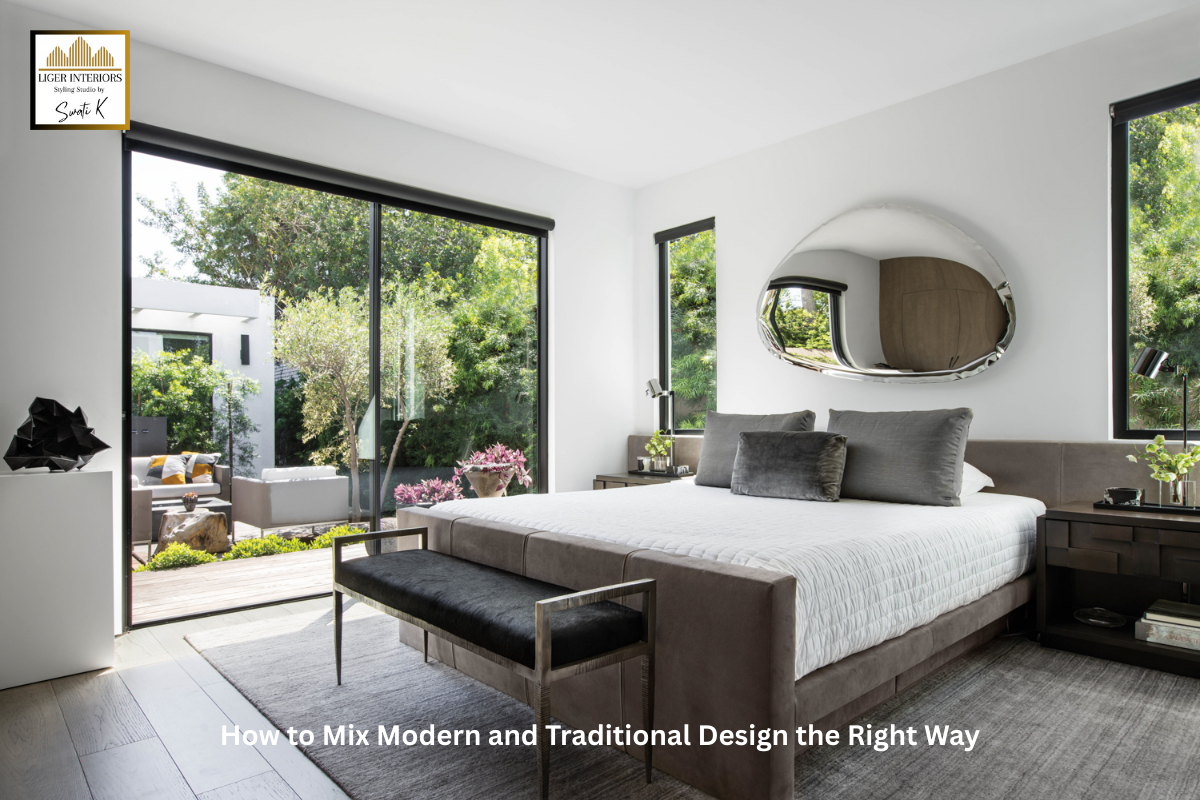
Creating Beautiful Homes That Combine Old and New Styles Perfectly
Mixing modern and traditional design creates unique, interesting homes. But doing it wrong makes rooms look confused and messy. Let’s learn how to blend these styles beautifully.
1. Understanding the Difference Between Modern and Traditional Design Styles
What makes each style different:
Before mixing styles, you need to understand what makes them unique.
Traditional design features:
- Ornate details and decorations
- Rich warm colors
- Heavy fabrics like velvet and silk
- Curved furniture lines
- Antique or vintage pieces
- Detailed patterns
- Formal arrangements
Modern design features:
- Clean simple lines
- Neutral color palettes
- Light open spaces
- Minimal decorations
- Geometric shapes
- Functional focus
- Less is more approach
Why mixing works: Traditional adds warmth and character. Modern adds freshness and simplicity. Together they create balanced, interesting spaces.
2. Start with a Neutral Base Color That Works with Both Styles
The foundation of successful mixing:
Your walls, floors, and large surfaces should be neutral. This lets both styles shine without fighting.
Best neutral base colors:
- Soft white
- Warm beige
- Light gray
- Cream
- Taupe
- Pale greige (gray-beige mix)
Why neutrals work:
| Benefit | How It Helps |
| Versatile | Works with any style piece |
| Timeless | Never goes out of fashion |
| Calming | Creates peaceful background |
- Unifying | Ties different styles together |
How to apply: Paint all walls one neutral color. Choose neutral flooring. Pick neutral large furniture. This creates a blank canvas for mixing styles.
Add color through:
- Traditional patterned rugs
- Modern colorful artwork
- Decorative cushions and throws
- Accessories and accents
Neutral base means you can change accents easily without repainting everything.
3. Follow the Rule of Choosing One Dominant Style for Each Room
Don’t split rooms exactly half and half:
Each room should lean more toward one style. The other style adds accents and interest.
How to choose dominant style:
Modern dominant (70% modern, 30% traditional):
- Modern furniture as main pieces
- Clean lined sofa and chairs
- Add traditional rug for warmth
- Include antique coffee table
- Traditional artwork on walls
Traditional dominant (70% traditional, 30% modern):
- Traditional sofa and armchairs
- Classic wood furniture
- Add modern lighting fixtures
- Include modern artwork
- Simple modern accessories
Why this balance works: One clear direction prevents confusion. The minority style adds interest and personality without overwhelming.
Example living room: Modern white sofa (dominant modern style) + traditional Persian rug + antique side table + modern floor lamp = balanced and interesting.
4. Mix Furniture Pieces But Keep Similar Visual Weight and Scale
Furniture is where mixing happens most:
You can absolutely mix modern and traditional furniture. But pieces must work together.
What is visual weight: How heavy or light a piece looks. Heavy carved wooden cabinet has high visual weight. Simple glass table has low visual weight.
Matching visual weight:
- Heavy traditional dining table needs substantial modern chairs
- Delicate traditional side table pairs with simple modern sofa
- Ornate traditional bed needs simple modern nightstands
Scale matters: Don’t put tiny modern chair next to massive traditional armoire. Keep furniture proportions similar.
Good furniture combinations:
Living room:
- Traditional tufted sofa + modern glass coffee table
- Modern sectional + antique wooden side tables
- Traditional armchair + modern floor lamp
Dining room:
- Traditional wooden table + modern simple chairs
- Modern glass table + traditional upholstered chairs
Bedroom:
- Traditional wooden bed + modern nightstands
- Modern platform bed + traditional dresser
Key rule: Don’t put all traditional furniture one side and all modern furniture other side. Spread the mix throughout the room.
5. Use Traditional Patterns with Modern Solid Colors for Perfect Balance
Patterns are important in mixing styles:
Traditional designs often have patterns. Modern designs prefer solid colors. Mix them carefully.
How to balance patterns and solids:
Option 1 – Traditional patterned rug:
- Use traditional Persian or Oriental rug
- Keep all furniture solid colors
- Add few patterned cushions
- Walls stay plain
Option 2 – Modern solid rug:
- Simple solid colored rug
- Traditional patterned curtains
- Solid modern furniture
- Mix patterned and solid cushions
Pattern mixing rules:
- Use same color family in different patterns
- Vary pattern sizes (large, medium, small)
- Don’t use more than three different patterns
- Balance busy patterns with solid areas
Example: Large traditional floral rug + medium striped cushions + small geometric throw + lots of solid furniture = works well.
Too many patterns = chaos and confusion.
6. Blend Old and New Through Layering Different Textures Together
Texture creates interest and warmth:
Different textures help traditional and modern pieces work together.
Traditional textures:
- Velvet upholstery
- Silk curtains
- Carved wood
- Ornate metals
- Rich thick fabrics
Modern textures:
- Smooth leather
- Polished metal
- Glass surfaces
- Linen fabrics
- Concrete or stone
How to layer textures:
Living room example:
- Smooth modern leather sofa
- Soft velvet traditional cushions
- Rough natural fiber rug
- Smooth glass coffee table
- Carved wooden decorative box
Bedroom example:
- Sleek modern bed frame
- Soft traditional quilted bedding
- Smooth wooden modern nightstand
- Textured traditional lamp base
- Silky curtains
Mix rough with smooth, shiny with matte, soft with hard. This creates depth and interest.
7. Use Lighting Fixtures to Bridge Between Traditional and Modern Styles
Lighting is perfect for mixing styles:
Light fixtures can be statement pieces that connect different styles.
Modern lighting in traditional rooms:
- Contemporary chandelier above traditional dining table
- Simple modern floor lamp beside traditional sofa
- Sleek pendant lights in classic kitchen
Traditional lighting in modern rooms:
- Antique chandelier in minimalist dining room
- Vintage table lamps on modern nightstands
- Classic wall sconces in contemporary hallway
Why this works: Lighting draws the eye upward. It creates visual interest without taking floor space. One striking light fixture can tie whole room together.
Mixing tip: If your furniture is mostly traditional, choose modern lighting. If furniture is mostly modern, traditional lighting adds warmth and character.
8. Create Symmetry and Balance Even When Mixing Different Style Pieces
Balance prevents rooms feeling chaotic:
When mixing styles, good balance is even more important.
How to create balance:
Symmetrical arrangements:
- Two matching modern chairs flanking traditional sofa
- Pair of traditional lamps on modern console table
- Traditional artwork centered above modern fireplace
Visual weight balance:
- Heavy traditional piece on one side balanced by modern piece on other side
- Dark traditional furniture balanced by light modern pieces across room
Color balance:
- Distribute colors evenly around room
- Don’t put all dark traditional pieces one area
- Spread modern light pieces throughout
Example balanced room: Traditional dark wood bookshelf (left wall) balanced by modern dark leather chair (right side). Traditional patterned rug (center) ties both together.
9. Add Modern Art to Traditional Rooms and Traditional Art to Modern Rooms
Art bridges style gaps beautifully:
Artwork is easy way to introduce opposite style without big commitment.
Modern art in traditional spaces:
- Abstract painting above traditional sofa
- Contemporary photography in classic dining room
- Geometric prints in traditional bedroom
Traditional art in modern spaces:
- Vintage portraits in minimalist living room
- Classic landscape paintings in contemporary office
- Antique prints in modern hallway
Why this works so well: Art is easily changed. You can try different combinations. Art adds personality and makes spaces feel curated and thoughtful.
Framing tip: Modern simple frames work with any art style. Traditional ornate frames only work with traditional or vintage art.
10. Use Accessories and Small Items to Test Your Style Mix
Start small before committing to big pieces:
Accessories let you experiment with mixing styles safely.
Small traditional items in modern rooms:
- Vintage decorative boxes
- Antique vases
- Traditional pottery
- Classic books on shelves
- Ornate picture frames
Small modern items in traditional rooms:
- Geometric candle holders
- Simple modern vases
- Contemporary sculptures
- Sleek storage boxes
- Minimal picture frames
Benefits of starting small:
- Easy to change if you don’t like it
- Learn what works before buying furniture
- Adjust balance until it feels right
- Build confidence in mixing styles
11. Know What Not to Mix to Avoid Making Rooms Look Messy
Some combinations don’t work:
Not everything can be mixed. Some things look wrong together.
Avoid these mixing mistakes:
Too many different wood tones: Stick to 2-3 wood tones maximum. Too many looks messy.
Clashing ornate patterns: Don’t mix busy traditional florals with busy geometric moderns. One should be subtle.
Extreme style contrasts: Ultra-modern minimalist with ultra-traditional baroque is too extreme. Find middle ground.
Mismatched metals: Choose 2-3 metal finishes maximum. All gold, all silver, or intentional mix. Not accidental chaos.
Wrong scale combinations: Delicate traditional piece gets lost next to massive modern piece.
12. Edit and Remove Items Until the Mix Feels Right and Balanced
Less is often more when mixing styles:
If room feels confused or busy, remove things.
Editing process:
- Set up room with mixed pieces
- Live with it few days
- Remove anything that feels wrong
- Add space between items
- Step back and look at whole room
- Keep editing until it feels balanced
Signs you need to edit:
- Room feels cluttered
- Eye doesn’t know where to look
- Styles seem to fight each other
- No calm restful areas
Final balance check: Take photo of room. Photos show problems you miss in person. If photo looks good, room works.
Mixing Styles Creates Unique Personal Spaces
Successfully mixing modern and traditional creates homes with character, warmth, and personality.
Key rules to remember:
- Start with neutral base
- Choose one dominant style per room
- Balance visual weight
- Mix textures and materials
- Use lighting to bridge styles
- Create symmetry and balance
- Start small with accessories
Your home should tell your story: Mix styles that you love. Don’t follow rules so strictly that your home feels generic. The best mixed spaces feel personal and collected over time.
Trust your eye: If something feels wrong, it probably is. Keep adjusting until room feels comfortable and balanced.
Mixing modern and traditional successfully takes practice. Start slowly, edit carefully, and create spaces that feel uniquely yours.