

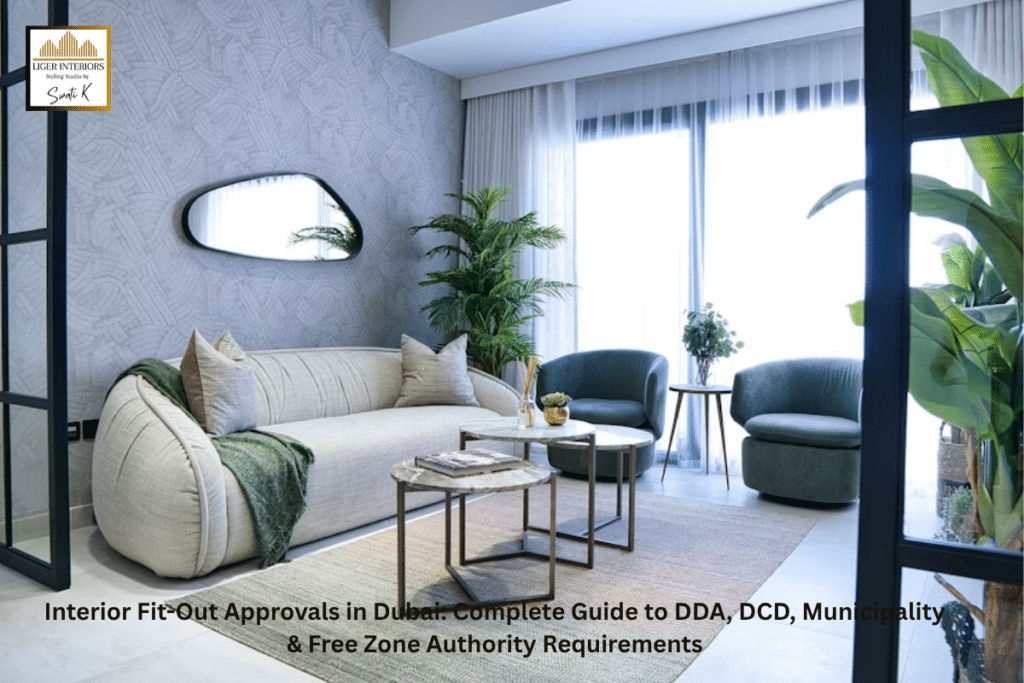
Interior Fit-Out Approvals in Dubai: Complete Guide to DDA, DCD, Municipality & Free Zone Authority Requirements
Introduction
One of the most underestimated aspects of interior fit-out projects in Dubai is the regulatory approval process. Property owners often focus on design and construction while treating approvals as a minor administrative task. This is a critical mistake.
In reality, approvals represent one of the longest phases of fit-out projects and the most common source of delays. Authority requirements vary based on location (which zone), project type, and scope of work. Missing requirements or submitting non-compliant documentation can result in weeks or months of delay while revisions are made and resubmitted.
Understanding Dubai’s approval framework isn’t optional—it’s essential for realistic project planning. This guide explains which authorities regulate which areas, what they require, and how to navigate the process efficiently.
The Authority Landscape in Dubai
Dubai’s regulatory structure involves multiple authorities with overlapping jurisdictions. The authorities you need depends on your project location.
Primary Authority: Dubai Municipality
Dubai Municipality is the primary approving authority for most interior fit-out projects across Dubai. They regulate:
- Architectural and structural design compliance
- Building safety standards
- Fire safety requirements
- Material and finish specifications
- Electrical and mechanical system safety
Nearly all fit-out projects require Dubai Municipality approval before construction can commence.
Dubai Civil Defence (DCD)
Dubai Civil Defence focuses specifically on fire and life safety. Their approval is mandatory for all commercial interior fit-out projects and required for residential projects involving structural changes.
DCD verifies:
- Fire safety systems and equipment
- Emergency exits and egress routes
- Fire-rated partition specifications
- Smoke detection and suppression systems
- Occupancy load calculations
DEWA (Dubai Electricity and Water Authority)
For projects involving electrical system modifications or new connections, DEWA approval is required. They verify electrical safety and system capacity.
Zone-Specific Authorities
If your project is in a free zone or development area, additional authorities may be involved:
DDA (Dubai Development Authority): Oversees Dubai Media City, Dubai Internet City, Dubai Knowledge Park, and Dubai Design District. DDA has specific approval requirements and design guidelines for these areas.
Trakhees: Regulates Jebel Ali Free Zone, managing approvals for projects in this area with specialized requirements.
DMCC: Dubai Multi Commodities Centre regulates projects in DMCC-controlled areas with its own approval procedures.
JAFZA: Jebel Ali Free Zone Authority manages approvals for projects in their jurisdiction with specific technical requirements.
DIFC Authority: Dubai International Financial Centre has specialized regulatory requirements for projects within its boundaries.
Building Management NOC (No Objection Certificate)
In addition to government authorities, the building’s management company or landlord must grant permission for interior modifications. This is technically a landlord approval rather than a government authority approval, but it’s equally important.
Interior Fit-Out Cost Breakdown Dubai 2026: Real Pricing Factors for Office, Retail & Residential
Understanding Approval Categories
Dubai distinguishes between different levels of fit-out based on modification scope, which affects approval requirements.
Category A Fit-Out
This involves basic finish installation with minimal structural or MEP changes. Authority approvals are typically simpler and faster.
Category B Fit-Out
This involves more extensive finishes, partitioning changes, and some MEP modifications. Authority review is more detailed.
Shell & Core Fit-Out
This is the most complex category, involving extensive structural work, full MEP installation, and comprehensive authority coordination. Approval timelines are longest.
Specialized Projects
Projects involving specialized uses—restaurants with commercial kitchens, healthcare facilities, data centers, or laboratories—have additional authority requirements and longer approval timelines due to technical complexity.
The Dubai Municipality Approval Process
Dubai Municipality’s approval process follows a structured sequence.
Step 1: Preparation of Drawings and Documentation
Before submission, detailed architectural and MEP drawings must be prepared by approved consultants. These must comply with:
- UAE Building Code
- Dubai Municipality regulations
- Emirate-specific requirements
- Technical standards for materials and systems
Step 2: Digital Submission
Dubai Municipality operates a digital submission system. Submissions include:
- Architectural plans (floor plans, sections, elevations)
- MEP (mechanical, electrical, plumbing) plans
- Reflected ceiling plans
- Material specifications
- Fire safety schedules
- Lighting and electrical load calculations
Step 3: Technical Review
Municipality engineers review submissions for:
- Compliance with building code
- Proper material specifications
- Correct fire safety measures
- Adequate electrical and mechanical capacity
- Proper ventilation and air quality standards
Step 4: Authority Comments and Revisions
Municipality typically issues comments requesting:
- Clarifications on specific details
- Design modifications to meet standards
- Additional information or calculations
- Changes to fire safety specifications
- Material or system upgrades
Step 5: Resubmission and Approval
You revise drawings based on comments and resubmit. After all comments are addressed, the Municipality issues formal approval.
Timeline Expectations:
Standard approval timelines range from 2-6 weeks, depending on:
- Completeness of initial submission
- Complexity of the project
- Responsiveness in addressing comments
- Current Municipality workload
Projects with incomplete or non-compliant initial submissions require additional review cycles, extending timelines significantly.
Dubai Civil Defence Approvals
DCD approvals focus exclusively on fire and life safety—a critical layer that many project managers underestimate.
What DCD Reviews:
- Fire rating of partition walls
- Emergency exit routes and dimensions
- Exit signage and lighting
- Fire detection and alarm systems
- Sprinkler or suppression system design
- Occupancy load calculations
- Access for emergency response
Key Requirements:
Fire-rated partitions must meet specific standards. DCD specifies whether partitions require 60-minute, 90-minute, or 120-minute fire ratings based on use and occupancy classification.
Exit routes must be properly dimensioned. DCD calculates required exit width based on occupancy load and exit route distance. Inadequate exits can require design modifications.
All interior materials must meet fire safety standards. DCD may reject materials that don’t meet required flammability ratings, requiring material substitution.
Timeline:
DCD approvals typically take 5-10 working days for standard projects, though more complex projects may require longer review periods.
Red Flags for DCD Delays:
- Partition specifications that don’t meet fire rating requirements
- Inadequate emergency exits
- Material selections that fail flammability standards
- Incorrect occupancy load calculations
Zone-Specific Authority Requirements
If your project is in a free zone or specialized development area, additional authorities with unique requirements may be involved.
DDA (Dubai Development Authority) Zones
Projects in Dubai Media City, Dubai Internet City, Dubai Knowledge Park, or Dubai Design District require DDA approval. DDA requirements sometimes exceed standard Municipality requirements in design quality and specification standards. They typically require:
- Design quality approval (aesthetic standards)
- Technical compliance
- Environmental considerations
- Sometimes specialized approvals for tech or media use
Trakhees (Jebel Ali Free Zone)
Trakhees oversees approvals in Jebel Ali Free Zone with specific technical requirements and documentation. They coordinate with other authorities but require separate Trakhees approval.
DMCC (Dubai Multi Commodities Centre)
DMCC-regulated areas have specific requirements and may require additional documentation or coordinated approvals.
DIFC (Dubai International Financial Centre)
DIFC projects have specialized requirements reflecting the international financial center nature. Design standards are often higher, and approvals may involve specialized reviewers.
Impact on Timelines:
Free zone projects typically have longer approval timelines (4-8 weeks) due to additional authority layers and sometimes stricter design standards.
Why Fit-Out Projects Get Delayed in Dubai: 8 Common Causes & Prevention Strategies
Common Approval Challenges and How to Avoid Them
The most frequent approval delays follow predictable patterns. Understanding these helps you avoid them.
Challenge 1: Incomplete or Non-Compliant Initial Submissions
Drawings that don’t comply with standards or lack required information trigger rejection or revision requests.
Prevention: Work with experienced consultants familiar with current Dubai requirements. Have drawings reviewed internally before formal submission to catch compliance issues.
Challenge 2: Fire Safety Specification Mismatches
Partition fire ratings or material selections that don’t meet DCD requirements require redesign and resubmission.
Prevention: Engage with DCD early in design development to confirm fire safety approach before detailed design is finalized.
Challenge 3: Occupancy Load Calculation Errors
Incorrect occupancy calculations result in inadequate exit routes and DCD rejection.
Prevention: Have occupancy loads calculated by qualified consultants and reviewed against actual space use before submission.
Challenge 4: Inadequate MEP Capacity
Existing MEP infrastructure may not support desired systems. This discovery during approval leads to redesign or scope reduction.
Prevention: Conduct MEP audits early in planning to understand existing infrastructure and plan accordingly.
Challenge 5: Material Non-Compliance
Materials selected don’t meet flammability or other specifications required by authorities.
Prevention: Specify materials with current compliance certifications and verify them against current standards before purchase.
Challenge 6: Sequential vs. Parallel Approvals
Authorities process approvals sequentially rather than in parallel, extending timelines unnecessarily.
Prevention: Experienced contractors coordinate parallel submissions where possible, reducing overall approval duration.
The Authority Approval Timeline: Realistic Expectations
Understanding realistic approval timelines helps in project planning.
Simple Category B Projects (no structural changes, limited MEP):
- Design development: 2-3 weeks
- Drawing preparation: 1-2 weeks
- Municipal submission and review: 2-4 weeks
- Authority comments and revisions: 1-2 weeks
- Resubmission and final approval: 1-2 weeks
- Total: 7-13 weeks
Standard Commercial Fit-Outs (office or retail with normal scope):
- Design development: 3-4 weeks
- Drawing and specification preparation: 2-3 weeks
- Multiple authority coordination: 4-6 weeks
- Authority comments and revisions: 2-3 weeks
- Resubmission and approval: 2-3 weeks
- Total: 13-19 weeks
Complex Projects (Shell & Core, specialized use, multiple authorities):
- Design development: 4-6 weeks
- Drawing preparation: 3-4 weeks
- Multi-authority coordination: 6-10 weeks
- Authority comments and potential design revisions: 3-4 weeks
- Resubmission and final approvals: 2-4 weeks
- Total: 18-28 weeks
These timelines assume responsive coordination and compliant submissions. Delays in addressing comments, incomplete revisions, or non-compliance extend these periods significantly.
Best Practices for Efficient Approvals
Several practices streamline the approval process.
Engage Early with Authorities
Some contractors conduct pre-submission meetings with authorities to discuss approach and anticipate requirements. This can prevent major revision cycles.
Work with Experienced Consultants
Consultants familiar with current Dubai standards prepare compliant drawings that pass review more quickly than consultants unfamiliar with local requirements.
Prepare Comprehensive Initial Submissions
Complete, detailed initial submissions with all required information and documentation lead to faster reviews than incomplete submissions requiring revision requests.
Assign a Dedicated Approval Manager
One person coordinating all authority submissions and tracking comments prevents communication gaps and delayed responses.
Maintain Organized Documentation
Systematic tracking of submissions, comments, revisions, and approvals keeps the process moving smoothly.
Build Contingency Time into Schedules
Realistic project schedules assume approval challenges and build in buffer time rather than expecting perfect first-time approvals.
Post-Approval: Construction Can Commence
Once all authorities issue formal approvals (NOCs—No Objection Certificates), construction can legally begin. No work should commence before all approvals are obtained. Starting work without approvals can result in:
- Work stoppages and site closure
- Fines and penalties
- Legal complications
- Potential blacklisting with authorities
Conclusion
Interior fit-out approvals in Dubai are complex, multi-layered processes involving multiple authorities with overlapping jurisdiction. Understanding which authorities regulate your project, what they require, and realistic timelines is essential for accurate project planning.
The most successful fit-out projects plan approval requirements alongside design and construction planning. They work with experienced consultants who understand current regulations, engage with authorities early, prepare comprehensive submissions, and maintain responsive coordination throughout the approval process.
By understanding Dubai’s approval landscape, you can plan realistically, avoid common delays, and ensure your fit-out project proceeds smoothly from concept to construction to completion.