
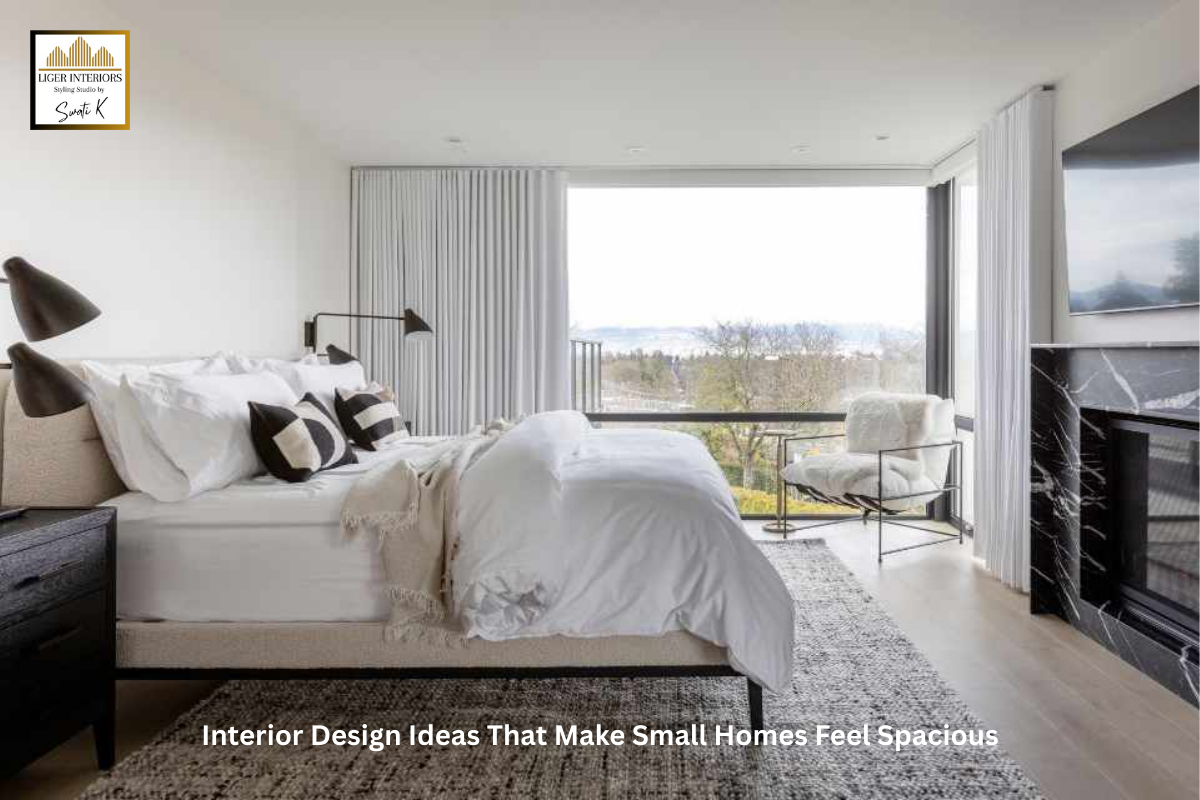
Simple Tricks That Make Your Small Home Look and Feel Much Bigger
Small homes don’t have to feel cramped or crowded. Smart design choices create the illusion of more space. Let’s explore easy ways to make your small home feel open and spacious.
1. Paint Everything in Light Colors to Make Rooms Feel Open and Airy
Why light colors create spacious feeling:
Light colors reflect light and make walls seem to disappear. Dark colors absorb light and make walls feel closer.
Best colors for small spaces:
- Pure white
- Soft cream
- Light gray
- Pale beige
- Off-white
- Barely-there pastels
Where to use light colors:
| Surface | Best Choice | Why |
| Walls | White or light gray | Makes room feel bigger |
| Ceiling | Bright white | Looks higher |
| Floors | Light wood or pale tile | Reflects more light |
| Large furniture | Neutral light tones | Doesn’t overwhelm space |
The one-color trick: Paint walls, ceiling, and trim all the same light color. This removes visual breaks and makes space feel continuous and larger.
Adding color without shrinking space: Use colorful accessories, artwork, cushions, and small items. Keep large surfaces light and neutral.
Avoid: Dark accent walls in small rooms make space feel even smaller. Save dark colors for large rooms.
Light colors make small spaces feel fresh, clean, and open. This simple change has the biggest impact.
2. Use Mirrors Strategically to Double Your Space Visually and Reflect Light
Mirrors are magic for small spaces:
Mirrors trick the eye into seeing more space than actually exists. They also bounce light around rooms.
Best mirror placement:
Opposite windows: Place large mirror directly across from window. It reflects outdoor view and natural light, making room feel twice as big.
End of hallways: Mirror at hallway end makes hallway look much longer than it is.
Behind furniture: Mirror behind sofa or console table adds depth and dimension.
On closet doors: Mirrored closet doors make bedrooms feel more spacious.
How to use mirrors effectively:
Size matters: One large mirror works better than many small ones. Big mirrors create bigger illusion.
Position at eye level: Hang mirrors where they reflect most of the room.
Reflect nice views: Point mirrors toward windows, artwork, or attractive features. Don’t reflect clutter or messy areas.
Multiple mirrors: If using several mirrors, keep frames similar style. Random different mirrors look cluttered.
Avoid: Don’t put mirrors where they reflect messy storage areas or create awkward reflections of people.
3. Choose Furniture with Exposed Legs That Shows Floor Space Underneath
Why furniture legs matter so much:
Seeing floor under furniture creates feeling of openness. Solid furniture sitting on floor looks heavy and takes up visual space.
Best furniture choices for small spaces:
Sofas and chairs:
- Thin legs that lift furniture off floor
- See-through glass or acrylic bases
- Metal legs in simple designs
- Avoid skirted furniture that hides floor
Tables:
- Glass tops show floor underneath
- Slim legs instead of solid bases
- Pedestal tables with small footprint
- Nesting tables you can tuck away
Beds:
- Platform beds with space underneath
- Beds with visible legs
- Storage beds that look lifted, not solid
Storage pieces:
- Cabinets on legs instead of sitting on floor
- Open shelving instead of closed cabinets
- Floating wall-mounted units
Why this works: Visible floor makes rooms feel more open. Your eye can see across entire floor space, making room feel larger.
The floating effect: Wall-mounted furniture appears to float. This shows maximum floor and creates very spacious feeling.
4. Get Rid of Clutter and Keep Surfaces Clear and Clean Always
Clutter makes small spaces feel tiny:
Too many items make small homes feel stuffed and chaotic. Clear surfaces create calm and spaciousness.
What to remove:
Kitchen counters: Keep only daily-use items out. Store everything else in cabinets.
Coffee tables: One small tray with few items maximum. Not covered with books, remotes, and random things.
Shelves: Display carefully chosen items with space between them. Not stuffed full.
Floors: Keep floors clear of items. No piles, bags, or random objects.
Decluttering rules:
One in, one out: When you buy something new, remove something old.
Regular editing: Every few months, remove items you don’t use or love.
Hidden storage: Use baskets, boxes, and closed storage for necessary items.
Minimal decorations: Few carefully chosen decorations look better than many small items.
The clear surface rule: Keep 70% of surfaces completely clear. This creates breathing room and makes spaces feel open.
5. Use Multi-Purpose Furniture That Serves Two or More Different Functions
Furniture that does multiple jobs saves space:
Every piece should work hard in small homes.
Best multi-purpose furniture:
Storage ottomans:
- Footrest or extra seating
- Hidden storage inside
- Can work as coffee table
Sofa beds:
- Daily sofa
- Guest bed when needed
- Saves needing separate guest room
Dining tables with storage:
- Eating surface
- Storage drawers underneath
- Some extend for guests
Bed with drawers:
- Sleeping space
- Clothing storage underneath
- Replaces need for dresser
Console table:
- Entryway table
- Desk for working
- Display surface
Folding or nesting furniture: Tables and chairs that fold away or stack when not needed.
Benefits: One piece replaces two or three separate items. This frees up floor space and makes rooms feel bigger.
6. Hang Curtains High and Wide to Make Windows and Ceilings Look Taller
Window treatment tricks create height:
How you hang curtains dramatically affects how big rooms feel.
The high and wide rule:
Height: Mount curtain rod near ceiling, not at window frame top. This draws eye upward and makes ceilings look higher.
Width: Extend rod 15-20 cm beyond window on each side. This makes windows look wider.
Length: Curtains should touch or puddle slightly on floor. Short curtains make ceilings look lower.
Curtain fabric choices:
Light and sheer:
- Let maximum light in
- Make space feel airy
- Create soft, open feeling
Vertical patterns:
- Stripes going up and down
- Make walls look taller
- Don’t use horizontal patterns
Light colors: Match curtains to wall color or go lighter. Dark curtains create heavy feeling.
Why this works: Your eye follows the curtain line up to the ceiling. This creates illusion of taller walls and more spacious room.
7. Maximize Natural Light by Keeping Windows Clear and Unblocked
Light makes spaces feel larger:
Dark rooms feel small and cramped. Bright rooms feel open and spacious.
How to get more natural light:
Remove window obstacles:
- Don’t put furniture blocking windows
- Keep window areas completely clear
- Move plants that block light
Clean windows regularly: Dirty windows block surprising amount of light. Clean inside and outside.
Light window treatments:
- Sheer curtains during day
- Blinds that tilt to let light in
- Remove heavy dark drapes
Reflective surfaces near windows: Place mirrors or light-colored furniture near windows to bounce light deeper into room.
Open floor plan: Remove unnecessary interior walls if possible. Let light flow through entire space.
Glass doors: Replace solid doors with glass panel doors where appropriate. Light travels between rooms.
8. Create Vertical Storage Using Walls from Floor to Ceiling Height
Go up, not out:
Small homes lack floor space. Use vertical wall space instead.
Vertical storage solutions:
Floor-to-ceiling shelving:
- Uses all wall height
- Holds much more than short shelves
- Draws eye upward, making room feel taller
Tall narrow cabinets:
- Small floor footprint
- Lots of storage capacity
- Fits in tight spaces
Wall-mounted storage:
- Floating shelves at different heights
- Wall hooks for coats, bags, keys
- Mounted bike racks or sports equipment
Above-door storage: Space above doors perfect for shelves or cabinets.
Kitchen vertical storage:
- Tall pantry cabinets
- Hanging pot racks
- Magnetic knife strips on walls
- Hooks under cabinets
Bathroom vertical storage:
- Over-toilet shelving units
- Tall narrow cabinets
- Wall-mounted organizers
Benefits: Vertical storage keeps floors clear while providing lots of storage. Clear floors make rooms feel much more spacious.
9. Use One Large Rug Instead of Many Small Rugs in Each Room
Rug size affects how big room feels:
Many people choose too-small rugs. This makes rooms look smaller.
The large rug rule:
Living room: Rug should fit under all front legs of furniture (sofa, chairs, coffee table). This groups furniture together and makes room feel cohesive and larger.
Dining room: Rug should extend 60 cm beyond table on all sides when chairs are pulled out.
Bedroom: Rug should extend beyond bed sides and foot. You step onto rug when getting out of bed.
Why large rugs work:
| Small Rugs | Large Rugs |
| Chop up floor visually | Create continuous space |
| Make room feel broken up | Unify the room |
| Look like afterthought | Look intentional |
Color choice: Light-colored large rugs make rooms feel more spacious than dark small rugs.
Avoid: Multiple small rugs scattered around. This creates visual chaos and makes space feel smaller.
10. Keep Your Color Palette Simple with Just Two or Three Colors Maximum
Too many colors create visual clutter:
Limited color palette makes small spaces feel calm and larger.
How to create simple color scheme:
Choose your colors:
- One main neutral (white, beige, gray)
- One accent color (any color you love)
- Optional second accent (use sparingly)
Where to use each:
Main neutral (60% of room):
- Walls
- Large furniture
- Floors
- Window treatments
First accent color (30% of room):
- Smaller furniture pieces
- Some cushions
- Artwork
- Area rug
Second accent color (10% of room):
- Small decorative items
- Few cushions
- Flowers or plants
- Accessories
Why this works: Cohesive color scheme makes space feel intentional and organized. This creates feeling of spaciousness.
Avoid: Many different colors competing. This creates chaos that makes small rooms feel even smaller.
11. Remove Unnecessary Doors to Create Open Flow Between Connected Rooms
Doors break up space:
Open doorways make spaces flow together and feel larger.
Where to remove doors:
Between living and dining: Creates open living space that feels much bigger.
Between kitchen and dining: Makes both spaces feel more spacious.
Bedroom closets: Open closets with nice organization look good and save door-swing space.
Home office: If office is alcove or small room, removing door opens it to main space.
When to keep doors:
Keep doors for:
- Bedrooms (privacy needed)
- Bathrooms (privacy essential)
- Laundry or utility areas (hide mess)
Alternatives to solid doors:
- Pocket doors that slide into wall
- Barn doors that slide along wall
- Curtains for flexible privacy
- Glass doors that let light through
12. Use Glass and Transparent Materials That Let Light Pass Through
See-through materials create openness:
Transparent furniture and accessories don’t block views or light.
Best transparent choices:
Furniture:
- Glass coffee tables
- Acrylic chairs
- Glass dining tables
- Lucite side tables
Partitions:
- Glass room dividers
- Clear shower doors instead of curtains
- Glass interior doors
Decorations:
- Clear vases
- Glass lamps
- Transparent storage boxes
Why this works: You can see through transparent items to the space beyond. This makes rooms feel more open and less crowded.
Many Small Changes Create Big Space Feeling
Small homes can feel spacious with smart design choices.
Most important strategies:
- Paint everything light colors
- Use large mirrors strategically
- Remove clutter constantly
- Choose furniture with legs
- Maximize natural light
- Use vertical storage
Quick checklist for spacious feeling:
- Walls and ceilings light colored
- At least one large mirror
- Furniture showing floor underneath
- Surfaces mostly clear
- Large area rug, not small ones
- Windows unblocked and clean
- Vertical storage maximized
- Simple color palette
Remember: Every item should earn its place. If something doesn’t serve a purpose or bring you joy, remove it.
Small doesn’t mean cramped. With these design ideas, your small home will feel open, airy, and spacious.