
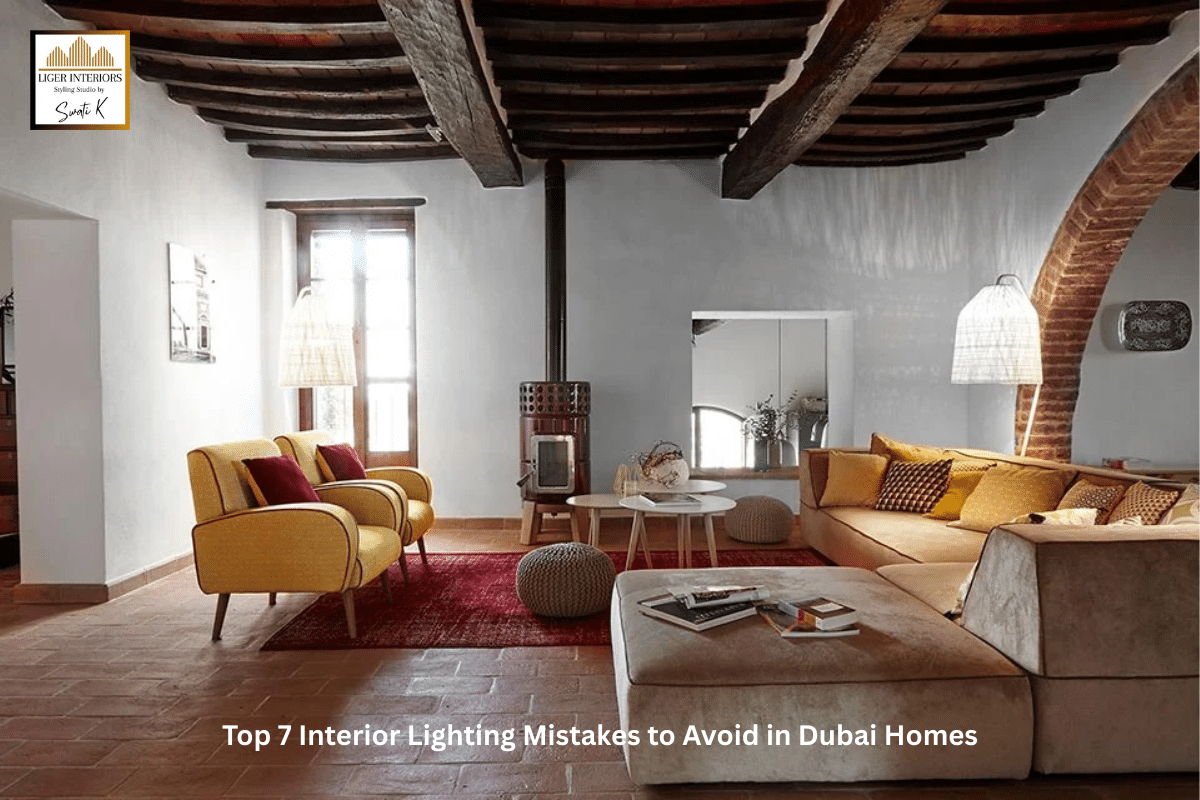
Top 7 Interior Lighting Mistakes to Avoid in Dubai Homes
Lighting can make or break your home’s look and feel.
Get it right and your home feels warm, spacious, and welcoming. Get it wrong and even expensive furniture looks cheap.
Here are 7 common lighting mistakes people make in Dubai homes and how to fix them.
1. Relying on Only One Light Source Per Room
This is the #1 lighting mistake.
The problem: Many Dubai apartments have just one ceiling light in each room. Turn it on and you get:
- Harsh shadows in corners
- Flat, boring lighting
- No atmosphere or mood
- Eye strain
It’s like wearing only one piece of clothing. Technically covered, but not well-dressed.
The fix – Use three lighting layers:
Ambient lighting (general illumination):
- Ceiling lights
- Recessed downlights
- Ceiling fan with light
Task lighting (for specific activities):
- Reading lamps by sofa
- Desk lamps in study area
- Under-cabinet lights in kitchen
- Mirror lights in bathroom
Accent lighting (creates mood):
- Floor lamps in corners
- LED strips behind TV or furniture
- Picture lights on artwork
- Table lamps on side tables
Real example:
Living room before:
- One ceiling light in center
Living room after:
- Recessed ceiling lights (ambient)
- Two floor lamps by sofa (task)
- LED strip behind TV (accent)
Result: Room feels cozy, functional, and looks way more expensive.
According to Moz, practical guides rank well. Same with lighting—practical layered lighting works well for real living.
2. Using Wrong Color Temperature
Not all white light is the same.
The problem: Mix cool white (bluish) and warm white (yellowish) in the same space. Result? Looks weird and uncomfortable.
Or use cool white everywhere. Result? Home feels like a hospital.
Understanding color temperature:
| Temperature | Look | Best For |
| 2700K | Warm yellow-white | Bedrooms, living rooms |
| 3000K | Soft white | Dining rooms, hallways |
| 4000K | Neutral white | Kitchens, bathrooms |
| 5000K+ | Cool blue-white | Garages, storage (not living spaces) |
The fix:
- Choose ONE color temperature per room
- Use warm white (2700-3000K) for most living spaces
- Save neutral white (4000K) for kitchens and bathrooms only
- Never use cool white (5000K+) in homes
Pro tip: Buy all bulbs from the same brand. Even if the box says “3000K,” different brands look slightly different.
3. Overlooking Dimmer Switches
Fixed brightness is limiting.
The problem: Same light level all day and night:
- Too bright for watching TV in evening
- Too dim for reading in afternoon
- Can’t create romantic dinner mood
- No control over atmosphere
Why dimmers matter:
Morning:
- Need bright light to wake up
- Full brightness for getting ready
Evening:
- Want soft, relaxed lighting
- Dim for movie watching
- Bright if kids doing homework
The fix: Install dimmers on:
- All living room lights
- Bedroom lights
- Dining room chandelier
- Even bathroom lights
Impact: Massive improvement in comfort
Smart dimmer options:
- Traditional rotary dimmers
- Touch dimmers
- Smart dimmers (control from phone)
- Compatible with LED bulbs (not all dimmers work with LEDs)
According to lighting design experts, dimmers increase lighting flexibility by 500% while using the same fixtures.
4. Ignoring Natural Light
Dubai has sunshine almost every day. Use it!
The problem:
- Heavy dark curtains blocking windows all day
- Furniture blocking natural light paths
- Dirty windows
- No mirrors to reflect light
The fix:
Window treatments:
- Sheer curtains during day (privacy + light)
- Blackout curtains for bedrooms (sleep quality)
- Motorized blinds (convenience)
- Top-down bottom-up blinds (privacy + light together)
Furniture placement:
- Keep large furniture away from windows
- Don’t block light paths
- Position reading chairs near windows
Mirrors:
- Place opposite or next to windows
- Reflects natural light deeper into room
- Makes space feel bigger
Clean windows: In Dubai’s dusty environment, windows get dirty fast. Clean them every 2-3 months. Makes huge difference in natural light.
Before and after:
Apartment in Marina:
- Before: Heavy curtains, windows always covered, dark even at noon
- After: Sheer white curtains, mirrors on walls, furniture rearranged
Result: Reduced daytime electricity usage by 40%, apartment feels twice as big.
5. Wrong Light Fixture Sizes
Size matters in lighting.
The problem:
Too small:
- Tiny chandelier in large living room (looks lost)
- Small pendant light over big dining table
- Doesn’t provide enough light
- Looks like a mistake
Too large:
- Giant chandelier in small room (overwhelming)
- Blocks views and walkways
- Feels oppressive
The fix – Use this formula:
Chandeliers and pendants:
Room width + Room length (in meters) = Chandelier diameter (in centimeters)
Example:
- Room: 5m wide, 6m long
- 5 + 6 = 11
- Chandelier should be approximately 110cm (1.1m) diameter
Dining table lights:
- Pendant/chandelier should be 1/2 to 2/3 the width of table
- Hang 75-90cm above table surface
Height considerations:
- In entryways: At least 210cm from floor to bottom of fixture
- Over dining tables: 75-90cm above table
- In bedrooms: Consider ceiling fan height for airflow
6. Neglecting Kitchen and Bathroom Task Lighting
These rooms need specific lighting for specific tasks.
Kitchen mistakes:
The problem:
- Only ceiling lights
- Work counter in shadow (your body blocks light when cooking)
- Can’t see inside cabinets
- Dangerous for cutting and cooking
The fix:
Under-cabinet lighting:
- LED strips under wall cabinets
- Illuminates counter directly
- Makes cooking safer and easier
Inside cabinets:
- Motion-sensor LED strips
- Opens cabinet, light turns on automatically
- Find things easily
Over island:
- Pendant lights (ambient + task lighting)
- 2-3 pendants over long islands
Bathroom mistakes:
The problem:
- Single ceiling light casts shadows on face
- Can’t see clearly for shaving/makeup
- Poor lighting around mirror
The fix:
Mirror lighting:
- Lights on BOTH sides of mirror (not just above)
- Eliminates shadows on face
- LED backlit mirrors (modern, even lighting)
Shower:
- Dedicated waterproof light in shower
- Don’t rely on general ceiling light
Night light:
- Small LED night light near floor
- Can use bathroom at night without blinding brightness
7. Not Planning for Electrical Outlets
Lighting needs power. Sounds obvious but often overlooked.
The problem:
- Want floor lamp but no outlet nearby
- Extension cords running across room (ugly and dangerous)
- Can’t add lights where needed
- Outlets blocked by furniture
The fix – Plan during renovation:
Living room outlets:
- Behind TV area (multiple outlets for electronics)
- Near each sofa end (for table lamps)
- In each corner (for floor lamps)
- Enough so no cable runs across walkways
Bedroom outlets:
- On both sides of bed (for bedside lamps and charging)
- Near dresser/vanity
- Inside or near wardrobe
Kitchen:
- Every 1.2m along counter
- Dedicated circuits for appliances
- Pop-up outlets in islands
USB outlets: Modern addition everyone loves. Outlets with built-in USB ports for phone/tablet charging.
Can’t renovate? Workarounds:
- Use wireless LED lamps (battery-operated)
- Decorative cable covers (hide extension cords)
- Power strips behind furniture
- Floor outlet boxes (for middle of room)
Common Lighting Myths
Myth 1: “More lights = better”
Reality: Quality over quantity. 3 well-placed lights beat 10 randomly placed ones.
Myth 2: “LED lights are too expensive”
Reality: LEDs cost more upfront but last 15-25 years and use 75% less electricity. They pay for themselves.
Myth 3: “One big chandelier is enough”
Reality: Needs supporting lights for complete coverage.
Myth 4: “Warm light makes colors look bad”
Reality: Warm light (2700-3000K) makes skin tones and most colors look better. Cool light can make everything look grey and lifeless.
Final Thoughts from Liger Interiors
Lighting is the easiest way to upgrade your home.
The golden rules:
- Layer your lighting (ambient + task + accent)
- Match color temperatures in each room
- Install dimmers for flexibility
- Use natural light during the day
- Size fixtures correctly for space
- Add task lighting in kitchen and bathroom
- Plan electrical outlets properly
Quick assessment – Is your lighting good?
Ask yourself:
- Can you read comfortably anywhere in the room?
- Are there dark corners or shadows?
- Can you adjust brightness for different activities?
- Does your home feel warm and welcoming?
- Can you see clearly for detailed tasks (cooking, grooming)?
If you answered “no” to any question, you have a lighting issue worth fixing.
Priority order for fixes:
- Add task lighting (kitchen, bathroom, reading areas) – Most functional improvement
- Install dimmers – Best bang for buck
- Replace wrong color temperature bulbs – Immediate atmosphere improvement
- Add accent lighting – Final touch for ambiance
- Upgrade fixtures – When budget allows
Remember: Good lighting isn’t about having the most expensive fixtures. It’s about having the right light, in the right place, at the right time.
Your home should work for you throughout the day, from morning coffee to late-night reading. Proper lighting makes that possible.